When a Bad Data Center Move Goes Good: One Call, One Team, Every Service
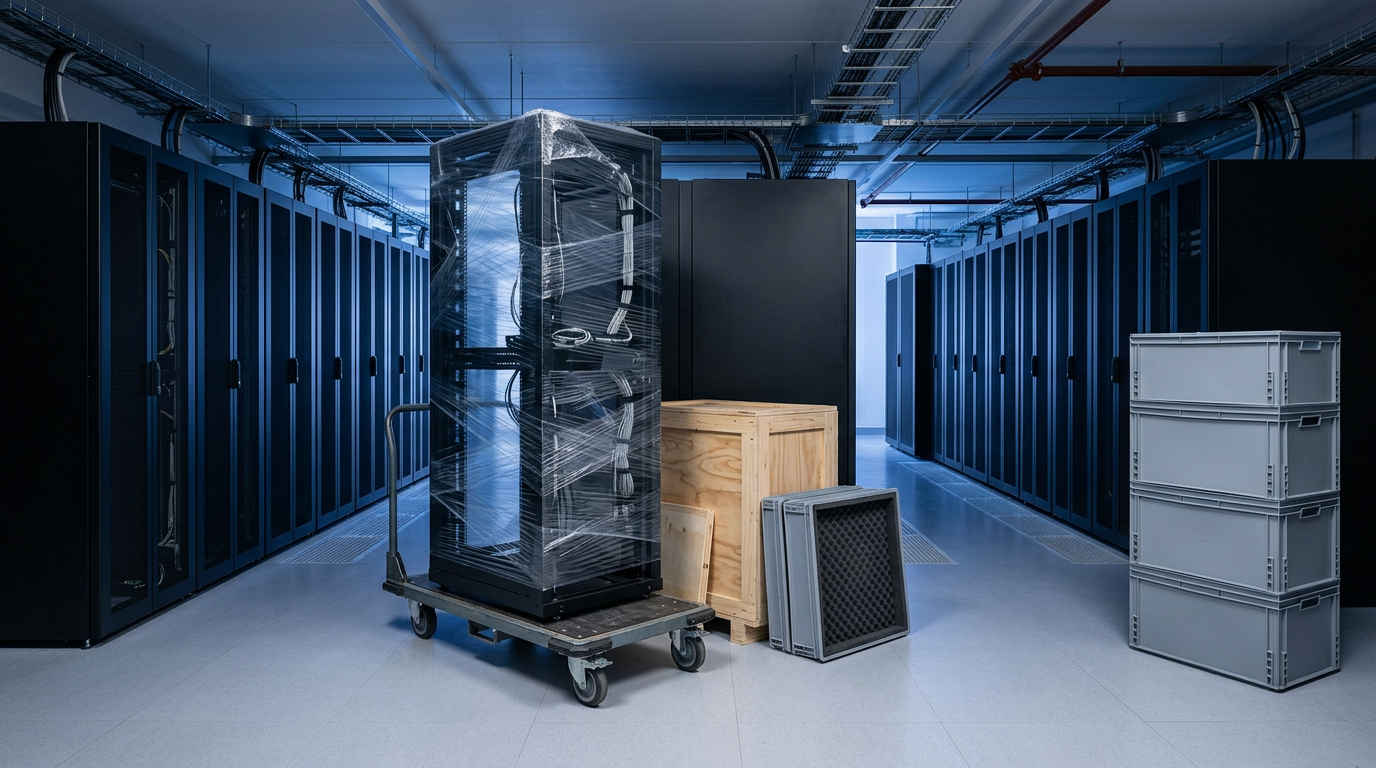
Planning a move and short on the right people?
One team, every service, start to finish. Tell us about your environment.
When this company called us, the servers weren't the problem. They knew what they had, they knew where it needed to go, and they had a window to get it done. What had them stuck was something much more basic: they couldn't find the right people to do the job.
They needed a full-service data center relocation, and every vendor they talked to could only handle one piece of it. Movers who could move furniture and freight but had never de-racked a server. IT technicians who could configure equipment but didn't do transport. Freight carriers who would haul crates but wouldn't touch what was inside them. Nobody wanted to own the whole project, and every conversation ended with the same suggestion: hire someone else for the rest.
Why finding the right people is so hard
This isn't unusual. A data center move sits between several industries, and most companies only cover one of them.
Most movers aren't IT specialists. General moving and logistics crews are good at getting heavy things from one place to another. But server racks, storage arrays and network gear need anti-static handling, careful de-installation, cable documentation and shock protection. A crew that treats a loaded rack like office furniture is a risk to the hardware and to the data on it.
Most IT firms don't do transport. Managed service providers and IT consultants can plan migrations, power systems down and bring them back up. But they typically don't own trucks, pack crates or manage secure chain-of-custody transport, so they hand that part to someone else.
Multiple vendors create gaps. Once you split the job between a planner, a moving company, an IT crew and a carrier, every handoff becomes a place where things can slip. Who is accountable if a device arrives damaged? Who signed for it at each stage? Whose schedule wins when the truck is late and the IT team is already on site? Chain of custody gets harder to document, scheduling gets harder to hold, and when something goes wrong each vendor can reasonably point at another.
That was exactly where this company found itself: plenty of partial answers, and no one willing to take responsibility for the whole move.
The call, and one point of contact
When they reached us, the first thing we did was take the coordination problem off their plate. Instead of asking them to assemble a team of vendors, we took over the entire project as their single point of contact: one team responsible for planning, packing, transport, re-installation and cutover.
That meant one schedule instead of four, one chain-of-custody record instead of a stack of separate receipts, and one team to call with questions. Our relocation process is built for exactly this, with discovery, planning, execution and validation all owned by the same people.
Everything we handled on this job
Here is what the project covered, start to finish. Each item links to the matching part of our services page if you want the details.
- Planning, inventory and audit
We started with a full discovery pass: every rack, device, cable run and dependency was inventoried and audited against their records, and the move was sequenced in phases with rollback points.
- Power-down and de-installation
Our crew powered systems down in the agreed order and de-racked equipment without disturbing anything that needed to stay running until its scheduled wave.
- Labeling and cable documentation
Every device was labeled, photographed and logged, and cabling was documented port-to-port so the environment could be rebuilt exactly as it ran.
- Anti-static packing and crating
Equipment was packed in anti-static, shock-protected materials and crated where needed, with each container tied back to the inventory.
- Secure transport with chain of custody
Shipments moved in exclusive-use vehicles with a documented chain of custody at every handoff, so nothing was co-loaded and nothing went unaccounted for.
- Re-racking, re-cabling and power-up
At the destination we re-racked and re-cabled to the documented configuration, verified placement and power, and brought systems up in sequence.
- Testing and network cutover support
We coordinated circuits and connectivity with the destination facility, followed a cutover runbook, and validated reachability before the old path was retired.
- Decommissioning and IT asset disposition
Equipment that was not making the trip was decommissioned with documented data sanitization or destruction and responsible disposition records.
Throughout the job, handling and documentation followed the same practices described on our compliance page, so the records could support the client's own audit needs.
Want one team to own your whole move?
From inventory to cutover, we handle every phase so you don't have to coordinate vendors.
The result: on schedule, documented, accountable
The move went from stalled to finished. The relocation was completed on schedule, every asset was documented from de-install through re-installation, and the chain of custody was unbroken from start to finish. Most importantly for the client, there was never a question of who was responsible. One team owned the plan, the people and the outcome.
What had looked like a bad move, weeks spent chasing vendors who could each do only one part, turned into a good one with a single phone call.
You can see more of the kinds of environments we move in our sample projects, and check where we work on our service areas page. We handle moves across the 48 contiguous states and international relocations to Canada, Mexico, Europe and Asia.
Checklist: how to vet a data center relocation partner
If you're planning a move, use these questions before you sign with anyone:
- Do they handle every phase in-house, or will pieces be handed to subcontractors you have never met?
- Will you have one named point of contact who owns the schedule from start to finish?
- Can they show a sample move plan with phases, rollback points and a cutover runbook?
- Do they document chain of custody at every handoff, and will you receive those records?
- Are their crews trained on IT equipment specifically, not just general freight?
- Do they use anti-static, shock-protected packing and exclusive-use transport?
- Is insurance coverage stated clearly and in writing before the move?
- Can they re-rack, re-cable and support testing and cutover, not just drop equipment at the door?
- Can they decommission and dispose of retired equipment with documented data sanitization?
- If your move crosses state lines or borders, do they handle long-distance and international logistics?
If you're moving because your current facility can't keep up with modern hardware, our post on the AI data center boom and why companies are relocating covers the bigger picture.
Frequently asked questions
Why hire one company for the whole data center move instead of several specialists?
When movers, IT technicians and freight carriers are hired separately, nobody owns the handoffs between them. A single full-service team owns planning, de-installation, packing, transport, re-installation and cutover, so scheduling, chain of custody and accountability stay in one place.
What services should a full-service data center relocation include?
At minimum: discovery, inventory and audit; move planning and sequencing; power-down and de-installation; labeling and cable documentation; anti-static packing and crating; secure transport with a documented chain of custody; re-racking, re-cabling and power-up; network cutover support; and decommissioning or IT asset disposition for equipment that is being retired.
How do I know if a relocation vendor is actually qualified?
Ask who performs each phase and whether they are in-house or subcontracted, request a sample move plan and chain-of-custody log, confirm insurance coverage in writing, and ask how they handle rollback if a system does not come back up as planned.
Do you handle data center moves outside our local area?
Yes. DataCenters Relocation handles moves across the 48 contiguous states and international relocations to Canada, Mexico, Europe and Asia, including customs paperwork, crating and air or ocean freight coordination.
Ready to plan your relocation?
Tell us about your environment and timeline, and a solutions engineer will follow up with next steps.